|
Although Agrippa considered hyssop a Moon plant (perhaps because of its somewhat camphoraceous scent), most others think of it as a Jupiter herb, because so many cultures over such a long time have used it for ritual purification. In ancient times, the Angel of Death was warned away from the houses of the Hebrews after they made hyssop brushes to dab lamb's blood on their door lintels. In the Middle Ages, hyssop was a strewing herb but it was also called for in the ritual purifications described in grimoires of ceremonial magic, such as the Key of Solomon, probably based on the Biblical practice. Early Modern writers like John Baptist Porta described hyssop as protective from the evil eye, and it is still used for that purpose in Sicily. European folk hung branches around the house to repel evil, and nowadays Pagans asperge their home with hyssop for protection. You can make a nice anointing oil with this essential oil by combining a couple of drops in a tablespoon of best quality olive oil. You can hardly get any more traditional than that! However, don't apply this or any eo to children or animals, don't use it neat, and don't use at all if you have a seizure disorder. Hydrodistilled from Hyssopus officinalus. Top Combining With Other Essential Oils Hyssop has a very herbaceous scent, full of notes of camphor and pine, much like mugwort or clary sage. It blends well with them and with bergamot mint, camphor, cananga, carnation, carrot seed, chamomile, champaca, cinnamon, coriander, costmary, currant bud, immortelle, labdanum, laurel leaf, lavandin, lavender, myrtle, parsley leaf, patchouli, petitgrain, pennyroyal, rosemary, sage, spruce, tansy, and tea. Top |
Organic Hyssop
Essential Oil 
Protection Spells © 2008-2024 Alchemy Works; No reproduction without permission |
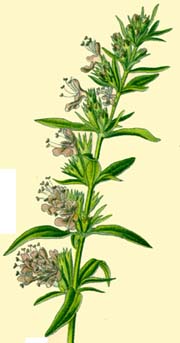 Organic Hyssop Essential Oil