|
This spice is often used
in love magick (or perhaps lust magick), especially when added to wine
(or try the Ayurvedic aphrodisiac recipe mentioned below). They are
also worn for healing. Some consider these seeds a Moon herb because of
their shape, but most think of it as a Mars
herb, because the talented Renaissance herbalist Culpeper designated
this magick herb as "hot in the first degree." This spice has a
somewhat nutty scent when burned and are nice mixed with olibanum, cypress, sandalwood, and cinnamon as an incense
for consecration or for prosperity spells. In Chinese folklore, eating
coriander while pregnant means the baby will be a genius. These make a
good incense ingredient. Top In Cosmetics Culinary Uses Coriander is a popular spice in both the Old World and the New. It has been found in ancient Egyptian tombs, and the ancient Greeks mixed it with flax seed in roasted barley to make a porridge. The Romans preserved meat and flavored food with it and introduced coriander to northern Europe, where it is still used to flavor liqueurs like chartreuse, gin, and vermouth and sometimes beer. This was one of the first herbs the Colonialists grew in the North America. In Ayurvedic medicine, an aphrodisiac is made from warm milk, honey, and coriander. In the Near East, the seeds are sugar-coated and chewed as a candy. Because it's anti-bacterial and anti-fungal, it's good for preventing cavities. A recipe for an Ayurvedic digestive suggests toasting coriander seeds in a dry skillet with fennel seeds and a pinch of salt, then nibble on the seeds after dinner (spit out the shells). Top |
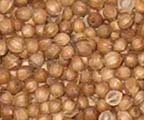
Coriander
seed, whole 
Prosperity Spells © 2004-2024 Alchemy Works; No reproduction without permission |
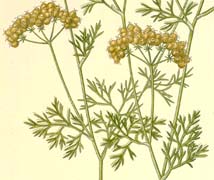 Coriander
 Its
taste and scent remind some people of orange blossoms, but most think
it resembles a combination of sage & citrus. The scent changes
gradually over time, improving for fragrance use. Seeds release their
scent to alcohol, or try an oil maceration; instead of grinding the
seeds, just bruise them before soaking. It was an ingredient in the
14th-century Carmelite water, a complexion aid and fragrance made by
nuns. Carmelite water included 1 lb of lemon balm leaves, 2 oz of lemon
peel, 1 oz
Its
taste and scent remind some people of orange blossoms, but most think
it resembles a combination of sage & citrus. The scent changes
gradually over time, improving for fragrance use. Seeds release their
scent to alcohol, or try an oil maceration; instead of grinding the
seeds, just bruise them before soaking. It was an ingredient in the
14th-century Carmelite water, a complexion aid and fragrance made by
nuns. Carmelite water included 1 lb of lemon balm leaves, 2 oz of lemon
peel, 1 oz