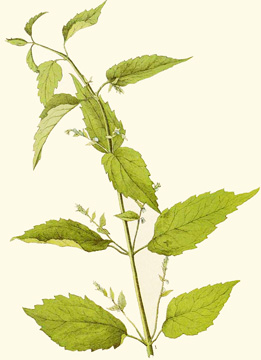
 Scutellaria lateriflora & Scutellaria incana
Mad-dog & Hoary Skullcap
A tea made from this herb is excellent for preventing nightmares and as a restorative after spiritual or magical assault or recovery from exorcism or other trials. In some traditional medicines, skullcap is combined with vervain. We would recommend this combination as a restorative for any spiritual work. Although this is a mint, which is often of Venus, skullcap, because of its effectiveness on the nervous system, is of Mercury. In Hoodoo, skullcap is used in charms for faithfulness (consider it also, then, for honoring Hera) and for attracting gifts of money. A nice herb to grow that does not call attention to itself of yell "witch!" in your garden but still has excellent magical uses.
The tea is drunk as a
nervine and sedative, calming anxiety and relieving stress. Mad-dog and Hoary
skullcap varieties have both served as traditional medicinal plants.
This magic herb can grow all over North America. Likes most mints, it favors water
and can grow in swampy areas--or find it a place beneath your garden
hose faucet, where it can make use of the drippings. This bitter
mint has been used to ease the anxiety of withdrawing from
addictive substances, for migraine, PMS, difficult sleep, and
grief. Good tea for workaholics at the end of the day, for restoring
health after a bout with the flu, for people recovering from stroke,
for folks in the aftermath of a seizure, or for those who have endured
a spiritual or magical assault. Typical amount used for a tea is 1/2-1
teaspoon in one cup of boiling water, allowed to steep for 15 minutes;
then drink 1/2-1 cup. Or make a traditional tincture of 1 part herb to
5 parts brandy; a dose is then 30-50 drops in water. An excellent
addition to dream teas or against nightmares. Nice to combine with
hops, passionflower,
and/or wild lettuce for
insomnia, with vervain
for anxiety, and passionflower
for hyperactivity or with valerian
(although skullcap does not leave a hangover as valerian can). Rarely grazed on by mammals or fowl, but ring-necked pheasant like the
seeds. Scutellaria laterifloria is called "mad-dog" because
it was once believed to be a treatment for rabies. Scutellaria incana,
"Hoary" or "Downy" skullcap, which gets its name from
the tiny white hairs that grow on its square stem, is taller and showier
than the Mad-dog, with larger flowers that attract many pollinators, including
hummingbirds and bees. Both skullcap varieties are pollinated primarily
by bumblebees. Also known as Quaker bonnet, madweed.
How
to grow Skullcap. This
seed needs cold stratification to germinate. You can do this by wetting
and wringing out a paper towel, sprinkle the seeds on it, fold closed
and press gently, put in a thin plastic baggie and leave the top open.
Then put that in either the fridge for 3 months or more dependably,
outdoors in a protected area, like a shed or an unheated garage. Check
in spring for germination and then shift seeds into seed-starting soil.
Mad-dog skullcap gets 6-26"/15-90cm tall.
Space 15"/38cm apart. It likes wet areas and can grow in full sun
or up to 70% shade.
Hoary skullcap gets 12-36"/6-90cm tall. Space 18"/45cm apart.
Prefers partial sun with moderate to dry conditions, though it
also tolerates moist conditions. Overall, skullcap, a perennial,
is fairly easy to grow in a garden and can grow from deeply cold
zone 3 to hot zone 9. For greatest potency, harvest the flowering
tops in their third summer and dry for later use. Mad-dog flowers
are quite small, something like those of hyssop, and Hoary flowers
are slightly larger.
General
growing info. Top
Scutellaria lateriflora
Mad-dog Skullcap
50 seeds $3.75
Scutellaria incana
Hoary Skullcap
50 seeds $3.75

Uses
in Witchcraft & Magic:
Restorative after
magical assault or trial
Faithfulness
Money Spells
Mercury Herb
©2011-2024 Alchemy Works; No reproduction without permission