 Whether you are Wiccan or Traditional, coven member
or solitary, kitchen or hedge witch, a garden can be a powerful and
vitalizing part of your magical practice. Growing herbs you will
eventually make part of your spellwork allows you to build both a deep
knowledge of and a relationship with those plants from the time they
are embryos in the seed until they are mature and ready to harvest;
this can add a great deal of power and focus to your work. Working in a
magical garden builds skill and confidence in personal paths in magic
as well as demonstrating how powerful outside forces are--you see the
results of your own decisions but also of factors outside of your
control. Folks often discuss how spirits are involved in initiation and
guidance in witchcraft and other magical practices. Plant spirits can
play those roles if you open yourself to their direction, and of course
the garden is the perfect place for learning to communicate with these
spirits. They become aware of you and come to know you as you honor
them by tending the herbs that embody them. Since a garden cannot be
faked, plant magic is as real as it gets, and a witch's garden is as
full of knowledge as any grimoire or book of shadows. You have only to
be open to it, have patience, and be willing to learn. Top
Whether you are Wiccan or Traditional, coven member
or solitary, kitchen or hedge witch, a garden can be a powerful and
vitalizing part of your magical practice. Growing herbs you will
eventually make part of your spellwork allows you to build both a deep
knowledge of and a relationship with those plants from the time they
are embryos in the seed until they are mature and ready to harvest;
this can add a great deal of power and focus to your work. Working in a
magical garden builds skill and confidence in personal paths in magic
as well as demonstrating how powerful outside forces are--you see the
results of your own decisions but also of factors outside of your
control. Folks often discuss how spirits are involved in initiation and
guidance in witchcraft and other magical practices. Plant spirits can
play those roles if you open yourself to their direction, and of course
the garden is the perfect place for learning to communicate with these
spirits. They become aware of you and come to know you as you honor
them by tending the herbs that embody them. Since a garden cannot be
faked, plant magic is as real as it gets, and a witch's garden is as
full of knowledge as any grimoire or book of shadows. You have only to
be open to it, have patience, and be willing to learn. Top
Siting Your Garden
When
you are planning a witch's garden, ask the spirits of the place for
help in siting it and keep in mind the interaction between human and
non-human a garden entails. Make it a comfortable place to be, bring
your magical practice into it (and allow it to enter your magical
practice), start small and know your limits, and make appropriate
sacrifices. You should understand the sanctity of garden work, keep the
motions of the heavens in mind, and take a broad view of your garden's
productivity. That's a bunch of shoulds, but the final should is that a
garden should be a delight. Try to open yourself to the spirits of the
place
before you site your garden. You want a good site physically for the
plants, but also spiritually--for them and for you. You can do this
simply by wandering about
your potential garden area at different times of the day and opening
yourself up to what is there. You should get a feel for which areas
will benefit cultivated plants. Full sun is preferred for many gardens,
but it's
possible to make a
wonderfully magical garden in shade, since many witching plants are not
only shade tolerant but actually prefer shade, like belladonna. In
fact, we wonder if part of the attraction to some of these herbs for
witches in the past was that they could grow in areas that might not be
so easily visible to neighbors or passers-by. Herbs growing around the
doorway are quite a bit different than herbs growing in the edge of the
woods or hedge bordering the witch's property. Top
Garden Interaction
A garden is a meeting place between human culture
and plant culture. Both sides have to give in order to meet and work
together. How does this work? Well, if you like to plant in rows, then
make the rows far enough apart so you are comfortable walking between
them and will linger. You can do this by using old cardboard boxes or
newspapers (6 sheets thick and overlapped) covered with mulch, which is
great for keeping down weeds and making a nice, soft and biodegradable
(and relatively inexpensive) place to walk and from which to
work with and learn from your plants. If the paths are too narrow, you
aren't going to feel comfortable out there. And for most gardens,
success is at least partly due to the gardener's attention. You can't
know something is bugging your plants unless you get out there every
day and have a look (and a feel). And it's good for your magical
practice to be there with your plants, soaking up the aura of their
spirits and opening yourself up to really listen to them, to all they
have to teach. It's also very good for the soul. So make it a place you
want to spend time
in. You don't need to have a
vast knot garden to create a special place where you can commune with
your plants, with nature, with the Fae, or even cast some spells. You
can do this in even a very small area, as long as you feel at ease
there. It all depends on how comfortable you make that area feel for
you and your plants. Top
A Place to Sit and Ponder
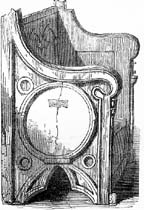 We aren't much on plastic, but we love those
plastic Adirondack chairs for
the garden (including a small container garden on an apartment balcony). They are inexpensive, clean easily, are sturdy, last
forever (almost literally), and they're comfortable. You can easily
shift them around to view, for instance, the bees working your
agastache in the morning or the grey fox scooting across your garden at
dusk. A nice built-in is an old tree stump, most of which are good for
sitting (or for planting, a half hollow stump can make a great planter for pansies, mints, or whatever you fancy). Top
We aren't much on plastic, but we love those
plastic Adirondack chairs for
the garden (including a small container garden on an apartment balcony). They are inexpensive, clean easily, are sturdy, last
forever (almost literally), and they're comfortable. You can easily
shift them around to view, for instance, the bees working your
agastache in the morning or the grey fox scooting across your garden at
dusk. A nice built-in is an old tree stump, most of which are good for
sitting (or for planting, a half hollow stump can make a great planter for pansies, mints, or whatever you fancy). Top
Magical Practice in Your Garden
 There
are many ways to bring your magical practice into your garden. If you
like to cast a circle, you can make a circular planting that will mark
that for you. You
can make an outdoor altar part of your garden, and it doesn't even have
to stick out. If you are doing the Abramelin operation, the garden is
the place for your retreat, which does not have to be any more
sophisticated than some poles with wood trellising lashed to them (then
add some nice vines to increase the privacy). If you enjoy connecting with
Hermes, consider piling rocks at the
corners of your garden. In his previous garden, our founder made a Priapus (a Greek sort
of scarecrow) by pruning a staghorn sumac appropriately. You can
usually create an area of some privacy in any garden by using shrubs,
treillises, or wire fences with vines growing on them. If nothing else,
most gardens can support a bean teepee--a bunch of poles tied together
at the top like a teepee that pole beans travel up, creating a private
place inside. If you can, it
is nice to make a small sleeping area so that at least
one fine night in the summer you can sleep outside with your plants and
allow them to speak to you through dreams or aid you in astral work. A
mulch bed is nice for
this, as it is soft and aromatic, but a hammock also works. Whatever
your practice, it will be potentiated by occurring in a natural place
you have made yours. Top
There
are many ways to bring your magical practice into your garden. If you
like to cast a circle, you can make a circular planting that will mark
that for you. You
can make an outdoor altar part of your garden, and it doesn't even have
to stick out. If you are doing the Abramelin operation, the garden is
the place for your retreat, which does not have to be any more
sophisticated than some poles with wood trellising lashed to them (then
add some nice vines to increase the privacy). If you enjoy connecting with
Hermes, consider piling rocks at the
corners of your garden. In his previous garden, our founder made a Priapus (a Greek sort
of scarecrow) by pruning a staghorn sumac appropriately. You can
usually create an area of some privacy in any garden by using shrubs,
treillises, or wire fences with vines growing on them. If nothing else,
most gardens can support a bean teepee--a bunch of poles tied together
at the top like a teepee that pole beans travel up, creating a private
place inside. If you can, it
is nice to make a small sleeping area so that at least
one fine night in the summer you can sleep outside with your plants and
allow them to speak to you through dreams or aid you in astral work. A
mulch bed is nice for
this, as it is soft and aromatic, but a hammock also works. Whatever
your practice, it will be potentiated by occurring in a natural place
you have made yours. Top
Start Small
 Some of the most difficult advice for a gardener to
take is to start small. A smaller garden can be better cared-for
and thus a happier and more productive garden. One of our most
satisfying
gardens wasn't in the ground but was in pots on our second-floor balcony. Aside from our many house plants, we had a few pots that we moved in and out each year, creating a beautiful, green, and private space in the summer. We loved sitting out there, and so did the cats (we created a "cat shield" to prevent them from escaping, which was also useful as a trellis for our morning glories, climbing nightshade, and ivy geranium.) It was
relaxing and a great
place for astral work. Top
Some of the most difficult advice for a gardener to
take is to start small. A smaller garden can be better cared-for
and thus a happier and more productive garden. One of our most
satisfying
gardens wasn't in the ground but was in pots on our second-floor balcony. Aside from our many house plants, we had a few pots that we moved in and out each year, creating a beautiful, green, and private space in the summer. We loved sitting out there, and so did the cats (we created a "cat shield" to prevent them from escaping, which was also useful as a trellis for our morning glories, climbing nightshade, and ivy geranium.) It was
relaxing and a great
place for astral work. Top
Know Your Limits
 Gardening
is hard work, so it's best to make
easier whatever tasks you can. That way, you can focus on the daily
tending and learning from a garden instead of being frustrated by doing
more than you can at the moment. If you are
starting out, choose plants that are easier to germinate and forgiving
of human mistakes, like clary sage, black-seeded poppy, elfwort, sage,
vervain, yarrow. Then try some seeds that have more persnickety
germination requirements, like cinquefoil and black nightshade and
powerful banefuls like henbane, belladonna, and foxglove. Save
monkshood, wolfsbane, and mandrake for when you have more experience
under your belt. Gradually you
will build not only your gardening confidence but your wortcunning.
With gardening, as with any magical practice, patience and diligent
work pay
off. But both gardening and magic teach us that the process itself
can be as rewarding as the goal. Top
Gardening
is hard work, so it's best to make
easier whatever tasks you can. That way, you can focus on the daily
tending and learning from a garden instead of being frustrated by doing
more than you can at the moment. If you are
starting out, choose plants that are easier to germinate and forgiving
of human mistakes, like clary sage, black-seeded poppy, elfwort, sage,
vervain, yarrow. Then try some seeds that have more persnickety
germination requirements, like cinquefoil and black nightshade and
powerful banefuls like henbane, belladonna, and foxglove. Save
monkshood, wolfsbane, and mandrake for when you have more experience
under your belt. Gradually you
will build not only your gardening confidence but your wortcunning.
With gardening, as with any magical practice, patience and diligent
work pay
off. But both gardening and magic teach us that the process itself
can be as rewarding as the goal. Top
Borders
 Learn from Saturn and maintain your borders.
Although this
flies in the face of the assumptions of permaculture, for much
gardening, a distinction must be made between what is garden and what
is not-garden. You
don't need to plant in rows or work in other ways that imitate
agriculture, but some kind
of line (invisible or not) should mark what is your garden and what is
not, because otherwise
it becomes very easy to be lax about caring for it. Most plants that we
grow are domesticated, and just like most domesticated animals, they
don't do all that well when left to their own devices. Your plants will
benefit from not only your attention but a certain focus on them in the
yard itself. They will grow bigger and happier if they have their own
space and are not having to compete with grass, for instance. Sometimes
a border can be as inconspicuous as simply hoeing where your garden is
and not hoeing elsewhere, but we have found that for me it is good to
make the border a little more emphatic. If you have rocky soil, you can use rocks dug up
to create a simple line for your garden borders. Little low fences or even simply cardboard
covered with mulch (which is an great way to deal with turf) can also work. In keeping with
borders, it is a good idea to smudge the borders of your yard and/or to
create a wall of energy around it to keep out varmints on two legs,
four, or six. It's good to welcome visitors, but a garden is always an
assertion of human presence. Top
Learn from Saturn and maintain your borders.
Although this
flies in the face of the assumptions of permaculture, for much
gardening, a distinction must be made between what is garden and what
is not-garden. You
don't need to plant in rows or work in other ways that imitate
agriculture, but some kind
of line (invisible or not) should mark what is your garden and what is
not, because otherwise
it becomes very easy to be lax about caring for it. Most plants that we
grow are domesticated, and just like most domesticated animals, they
don't do all that well when left to their own devices. Your plants will
benefit from not only your attention but a certain focus on them in the
yard itself. They will grow bigger and happier if they have their own
space and are not having to compete with grass, for instance. Sometimes
a border can be as inconspicuous as simply hoeing where your garden is
and not hoeing elsewhere, but we have found that for me it is good to
make the border a little more emphatic. If you have rocky soil, you can use rocks dug up
to create a simple line for your garden borders. Little low fences or even simply cardboard
covered with mulch (which is an great way to deal with turf) can also work. In keeping with
borders, it is a good idea to smudge the borders of your yard and/or to
create a wall of energy around it to keep out varmints on two legs,
four, or six. It's good to welcome visitors, but a garden is always an
assertion of human presence. Top
Sacrifices
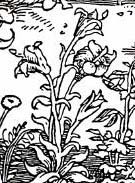 Many
witches talk about giving something back to the land
when they harvest and tuck some tobacco, for instance, in the soil. When you care for a garden, you are always giving something back
to the land. You have to, or you won't have a garden for very long--it
will be reabsorbed into the wild or just poop out. Every
time you fertilize, water, or add compost, you are giving something
back to the land. Every time you groom your plants and pick off
marauding bugs, you are giving something back to the land. Whether you
till under or use raised beds or mulching, you are giving something
back to the land. Perhaps this is the best kind of offering you can
make and one that is peculiar to us as humans. It's easy for us to
forget
that such work is magic. Top
Many
witches talk about giving something back to the land
when they harvest and tuck some tobacco, for instance, in the soil. When you care for a garden, you are always giving something back
to the land. You have to, or you won't have a garden for very long--it
will be reabsorbed into the wild or just poop out. Every
time you fertilize, water, or add compost, you are giving something
back to the land. Every time you groom your plants and pick off
marauding bugs, you are giving something back to the land. Whether you
till under or use raised beds or mulching, you are giving something
back to the land. Perhaps this is the best kind of offering you can
make and one that is peculiar to us as humans. It's easy for us to
forget
that such work is magic. Top
The Sanctity of Garden Work
 For many of us, there is nothing that brings us as
close to the spiritual world as working in the garden. Make it as
pleasant as you can so you will do more of it. Choose good tools that
you know will serve you long and well, and care for them. Keep them
under cover so they don't get rained on and clean them before putting
them away for the season. Smudging them at the beginning and end of the
season is also
a nice thing to do. Treating a garden tool like a wand, because for the
green witch, it IS a wand. Top
For many of us, there is nothing that brings us as
close to the spiritual world as working in the garden. Make it as
pleasant as you can so you will do more of it. Choose good tools that
you know will serve you long and well, and care for them. Keep them
under cover so they don't get rained on and clean them before putting
them away for the season. Smudging them at the beginning and end of the
season is also
a nice thing to do. Treating a garden tool like a wand, because for the
green witch, it IS a wand. Top
As Above, So Below
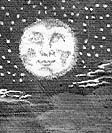 Alchemy teaches us that the
great and the small, the high and the low, are linked and influence
each other (wonder if this is where Hegel got his unity of opposites
idea). This plays out in the garden not only in terms of how we
interact with seeds but also in terms of time. Gardening by the Moon,
the signs, and the procession of the equinoxes can bring a very
satisfying
unity to your garden and magical work. It emphasizes our own physical
links to the rest of the world and allows us to see the tiny changes
that we usually don't notice. We think that much of magic is in those
tiny changes. Top
Alchemy teaches us that the
great and the small, the high and the low, are linked and influence
each other (wonder if this is where Hegel got his unity of opposites
idea). This plays out in the garden not only in terms of how we
interact with seeds but also in terms of time. Gardening by the Moon,
the signs, and the procession of the equinoxes can bring a very
satisfying
unity to your garden and magical work. It emphasizes our own physical
links to the rest of the world and allows us to see the tiny changes
that we usually don't notice. We think that much of magic is in those
tiny changes. Top
All Gardens Are Magical
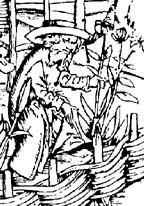 A garden can focus on
Elementals, planetary influences (all Venus herbs, for instance), a
particular deity, or particular spellwork, such as protection or love
magic. We just choose plants we are attracted to, which ends up being a
shifting landscape with a few tried-and-true plant allies that we tend to each year.
We do think that simply choosing plants
you're attracted rather than choosing a theme can teach lessons in
itself. For example, Alchemy Works' founder, Harold Roth, had a particular attraction to Saturn plants, which was part of his preoccupation with
borders and interest in the Underworld. Growing those plants helped
him learn about those aspects of himself and pointed out directions for his
magical practice. Top
A garden can focus on
Elementals, planetary influences (all Venus herbs, for instance), a
particular deity, or particular spellwork, such as protection or love
magic. We just choose plants we are attracted to, which ends up being a
shifting landscape with a few tried-and-true plant allies that we tend to each year.
We do think that simply choosing plants
you're attracted rather than choosing a theme can teach lessons in
itself. For example, Alchemy Works' founder, Harold Roth, had a particular attraction to Saturn plants, which was part of his preoccupation with
borders and interest in the Underworld. Growing those plants helped
him learn about those aspects of himself and pointed out directions for his
magical practice. Top
Whether your garden is on your windowsill or a few acres, private or open to visitors, half-wild or a knot garden, it can be productive for you. All gardens give some kind of harvest, be it of herbs, veggies, fruit, flowers, or the lessons of wortcunning, of patience, of determined struggle, and of being able to see the past, the present moment, and the future at the same time. If your garden produces nothing but renewal, it is a bountiful garden and a blessed place. Top
© 2006-2024 Alchemy Works; No reproduction without permission.
You can order any of the
seeds below by clicking on them and going to their individual pages, or
you can purchase one of our seed collections for the witch's
garden at a 10% discount off the original price. Please note that we have a limited stock of collections available each
growing season. If you see something marked as "Sold Out" try buying the seeds separately
by clicking their links. We try to keep individual seed packets in stock throughout the year. Witch's Garden Collections Intermediate Collection Challenging Collection Complete Collection Basic Collection The Witching Herbs Book Collection
Starter Collection
5 easy plants for the Witch's Garden:
Black-seeded Poppy,
Elfwort,
Mugwort,
Vervain,
Yarrow
$18.75 (10% off)
8 moderately difficult plants for the Witch's Garden:
Belladonna,
Clary Sage,
Foxglove,
Henbane,
Hyssop,
Rowan,
Rue,
Wormwood
$29.25 (10% off)
Cannot be shipped to North Dakota.
3 difficult plants for the Witch's Garden:
Wolfsbane,
Monkshood,
Black Mandrake
All 16 seeds from the Witch's Garden Starter, Intermediate & Challenging Collections (see above for links)
$61.50 (10% off)
The quintessential Witching Herbs:
Belladonna,
Henbane,
Mandrake
$12.60 (10% off)
All 13 plants from Harold's book:
Elka/Crone Poppy,
Clary Sage,
Yarrow,
Rue,
Hyssop,
Vervain,
Mugwort,
Wormwood,
Thornapple/Jimsonweed,
Wild Tobacco,
Henbane,
Belladonna,
White Mandrake
$52.25 (10% off)
Cannot be shipped to North Dakota.