Previous  Seeds   Herbs   Resins   Oils   Supplies   Links   Main   Contact  Next

Digitalis purpurea flowers Digitalis species
Foxglove varieties

This plant got the name "Folk's Glove" for the Folk who live in the woods, where it likes to grow.  A visionary plant that is one of the baneful herbs, this perennial woodland plant is of Saturn and associated with the Underworld, although some consider it a Venus herb. It has long been a staple of a witch's garden (but also graces cottage gardens) and was grown in medieval gardens as well.  The juice of this magick herb ritually collected and put in the center of a ritual circle in order to commune with Faeries (don't let the juice touch your skin, as it is quite poisonous - I wear latex gloves when working with this plant).  You can also plant it by your door to invite the Faery in or carry a sprig to attract Faery protection. All kinds of bees, from honey bees to bumble bees to mason bees, love this flower; the spots show them where the nectar is. The ruby-throated hummingbird likes this plant too. Although now this flower family is famous for providing heart medicine, in pre-modern times the leaves were made into a poultice for wounds and sores (however, even a poultice of the leaves can be fatal). This plant is so poisonous that ingesting only .5 gram dried or 2 grams of fresh leaf is enough to kill a person, but it is very bitter, so ingestion is very unlikely; almost all poisonings from digitalis are due to medical administration of the alkaloid in pill form. Still, be careful when handling and do not breathe the smoke. For the least amount of alkaloids, a) grow it in the shade, b) harvest in the fall, after the plant has made seeds, and c) take the lowest leaves on the plant. Digitalis purpurea that has white or light pink flowers is less poisonous than if it has dark pink or purple flowers. This classic cottage garden plant is also known as Witches' Gloves, Dead Men's Bells, Fairy's Glove, Gloves of Our Lady, Bloody Fingers, Virgin's Glove, Fairy Caps, Folk's Glove, and Fairy Thimbles. I now have nine types--cluster-flowering, giant, hairy, pink Spanish, purplewhite, wooly, yellow and small yellow. How to grow it.  Top

I have six types of foxgloves: cluster-flowering, hairy, purple (classic), rusty, wooly, and small yellow.

Uses in Witchcraft & Magic:

Attracting Fairies
Witch's Garden
Baneful Work
Divination
Saturn/Venus Herb

© 2004, 2006 Alchemy Works; No reproduction without permission

Digitalis ciliata in my upstat NY gardenDigitalis ciliata
Hairy Foxglove
Called "ciliata" because of the very fine hairs covering the stalks and even the butter-yellow flowers, this wild-type foxglove is a native of the Caucasus, where it likes to grow along the edges of pine forests It is wonderfully dainty, fitting well in cottage gardens. Gets 12-24in/30-60cm tall. I have seen info that this is hardy only in warm climates (down to 25F/-3C), but it over-wintered just fine in my upstate NY garden. In Georgia, this is the medicinal foxglove. How to grow it.  Top

Digitalis ciliata
Hairy Foxglove
100 seeds $3.00


View Your Shopping Cart  


Digitalis ferrugineaDigitalis Ferruginea
Rusty Foxglove
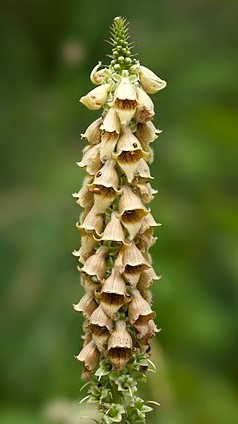
I love the "bumblebee brushes" on this flower. This foxglove comes from southeastern Europe and the Near East and has been cultivated since at least the 17th century (it's mentioned in Gerard's Herbal) in Europe and since 1806 in the US. It gets 38-48in/90-120cm tall and is hardy to zone 4 (down to -30F/-34C), although it's a short-lived perennial (might live only 3 years). Mine took 3 years to bloom, but it was in a lot of shade. This is a very elegant foxglove, longer and more refined than the others. It reminds me of the long tapers used at formal dinners. 

Digitalis ferruginea
Rusty Foxglove
100 seeds $3.00


View Your Shopping Cart  


Digitalis floribunda in my upstate NY gardenDigitalis floribunda
Cluster-Flowering Foxglove

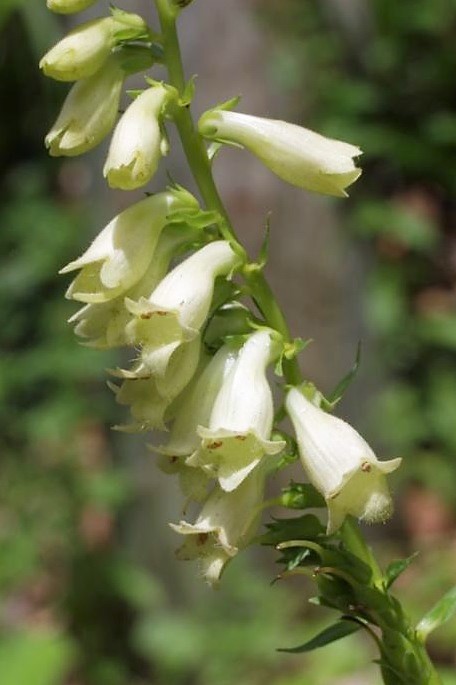
This foxglove is similar to D. lutea . The flowers are butter yellow, which seems common among the wild foxgloves, but they have no netting, only tiny smudges of orange inside. It gets about 2-3ft/60-90cm tall and is especially nice at the edge of woodlands. It has grown quite vigorously in my upstate NY garden, overwintering easily. How to grow it.  Top

Digitalis floribunda
Cluster-flowering foxglove
100 seeds $3.00


View Your Shopping Cart  


Digitalis lanata Digitalis lanata
Wooly Foxglove
This native of Southeastern Europe gets its name because its buds are covered with a wonderful thick fuzz. Flowers have long white lower lips and brown inside. This is the foxglove now grown in Holland and Germany to make the heart medicine digoxin. It can be perennial or biennial in zones 4-9, but usually needs a second year for flowering to occur in early summer. It gets 3 ft/80 cm tall and reseeds easily. This plant is also known as Grecian Foxglove, Wooly Thimble, and White Thimble. This is a variety of D. lanata called "Cafe Creme." How to grow Foxglove.  Top

Digitalis lanata
Wooly Foxglove
100 seeds $3.00


View Your Shopping Cart  


Small Yellow Foxglove Digitalis lutea
Small Yellow Foxglove
Try this native of the Alps if you live in the Rockies. The flowers are usually light yellow, like D. ambigua, but it is a daintier plant, and some of the flowers are white. It is considered less dangerous than D. purpurea. This foxglove gets 24-39 in/60-100 cm tall and prefers partial shade. An infusion of the plant added to water will help cut flowers stay fresh longer. Growing this plant near root crops is supposed to make the root crops store longer. This plant is attractive to wool carder bees. The male wool carder bees stake out a patch of flowers and use it to attract females. They will chase off other bugs that try to drink the nectar of their flowers. The female bees scrape up plant hairs and line their nests with them. They especially like having fuzzy plants around like Stachys lanata. Small yellow foxglove is perennial throughout the continental US (zones 3-10). This plant is also known as Straw Foxglove and Yellow Thimble. How to grow Foxglove.  Top

Digitalis lutea
Small yellow foxglove
100 seeds $3.00


View Your Shopping Cart  


Digitalis purpurea in my garden Digitalis purpurea
Purple Foxglove
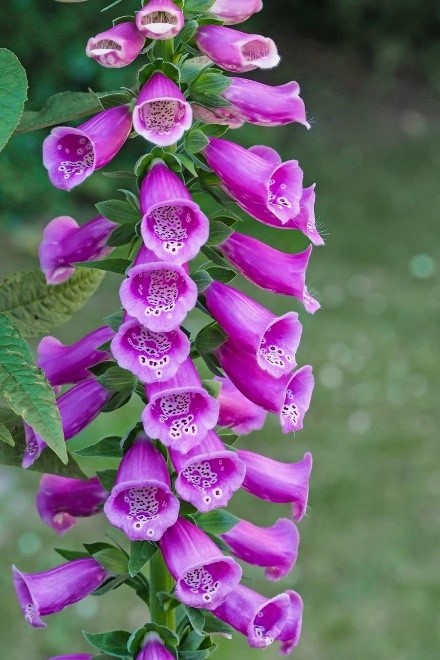
This is the classic wild version.  Although the flowers of this foxglove are typically a pinkish purple, they can also be white or pink. It grows four feet high. How to grow Foxglove.  Top

Digitalis purpurea
Purple foxglove
1000 seeds $3.00


View Your Shopping Cart


Cottage Garden Plant

How to grow Foxglove

Foxglove seedpod All these foxgloves germinate very quickly at room temperature. These are robust seeds. Surface sow and keep moist but not sopping wet (a mister helps). Transplant to full sun in the far North and in shade farther South.  This plant can't take hot weather.  Zone 8 is the hottest (unless indicated otherwise). Foxglove likes rich soil, so add plenty of compost.  It forms a rosette the first season and sends up flower spikes the second.  If your season is long enough, this plant will make seedpods and reseed itself.  Wait till the seedpods are completely brown (picture shows one still green) before you harvest the seeds.  If you live in an area with hard winters, cut off the flowers as soon as they are finished.  The plant won't make any seeds, but it will then start putting its energy into building a strong root to survive the winter.  Once it gets developed enough, you can make new plants by dividing the roots of the old ones and replanting. The different species don't cross, so you can grow a number of species next to each other and still get true seeds. General growing info  Top.