 Pulsatilla
vulgaris (Anemone pulsatilla)
Pulsatilla
vulgaris (Anemone pulsatilla)Wild Pasque Flower
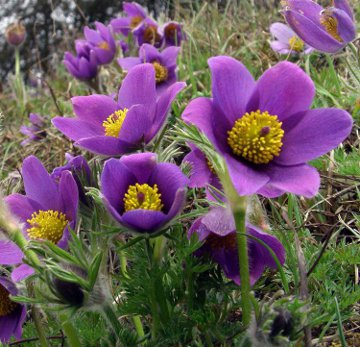
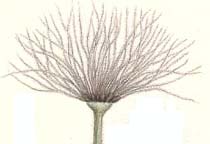
A native of Europe, where it is often planted on graves, pasque flower grows wild from Great Britain to the Ukraine. Pasque flower is ruled by Mars because its sap is acrid and burning and because it is hairy, which is a type of thorniness in plants. All pasque flowers are considered protective, especially against negative magick and evil spirits. Historically people might carry a pasque flower wrapped in a red cloth for this purpose. Pasque flowers are thought to be especially effective for protecting the home when grown around it. In Scotland, picking this plant was believed to cause thunderstorms, and it was called Thunderbolt, which gives this plant an interesting connection to various thunder gods. As its name indicates, this magick herb flowers in early spring (March-April), at the time of Ostara/Easter and Passover. The 2-4" flowers appear even before the gray-green ferrn-like leaves are developed. Fairies are said to sleep inside the closed flowers at night. The flowers fade to silky seed heads that pulse in the smallest breeze, giving this plant the name pulsatilla and wind flower or wind anemone. Top
 In
Herbalism. Pliny
used pasque flower as a topical painkiller, but this plant is a member
of the buttercup family, one of the most poisonous, and the sap is
enough of an irritant that for sensitive people, just touching the
plant can cause dermatitis, especially if any part of the plant is cut.
It is best to enjoy this plant where it grows rather than trying to cut
flowers from it, which wilt very quickly. Be careful when handling this
plant if using it to make a flower remedy; don't ever ingest it.
Vibrational medicines like flower essences and homeopathic remedies are
the only safe way to use this plant medicinally. They help deal with
conditions where the mind is the most important part of the
problem--gloominess, depression, restlessness, brooding, pessimism,
sadness, and general nervousness, weepyness, scattered thoughts. Pasque
flower's flower essence can aid in relaxation and insomnia, especially
when sleep usually means sorrowful dreams. In homeopathy, pasque flower
(called pulsatilla) is used against headaches, migraine, cramps, and
pains like varicose veins. It is a traditional homeopathic remedy for
young girls who are very fearful, weepy, and clinging. Top
In
Herbalism. Pliny
used pasque flower as a topical painkiller, but this plant is a member
of the buttercup family, one of the most poisonous, and the sap is
enough of an irritant that for sensitive people, just touching the
plant can cause dermatitis, especially if any part of the plant is cut.
It is best to enjoy this plant where it grows rather than trying to cut
flowers from it, which wilt very quickly. Be careful when handling this
plant if using it to make a flower remedy; don't ever ingest it.
Vibrational medicines like flower essences and homeopathic remedies are
the only safe way to use this plant medicinally. They help deal with
conditions where the mind is the most important part of the
problem--gloominess, depression, restlessness, brooding, pessimism,
sadness, and general nervousness, weepyness, scattered thoughts. Pasque
flower's flower essence can aid in relaxation and insomnia, especially
when sleep usually means sorrowful dreams. In homeopathy, pasque flower
(called pulsatilla) is used against headaches, migraine, cramps, and
pains like varicose veins. It is a traditional homeopathic remedy for
young girls who are very fearful, weepy, and clinging. Top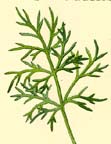 In
the Garden This
plant likes to grow in clumps in rich woodland conditions. Give it full
sun up north and partial shade farther south. It is a temperate climate
plant, hardy from zone 5 (-20F/-28C) up to zone 8 (10F/-12C), but it
does not like heat, because it is basically an alpine plant. This
variety, named "Red Bell" by its German developer, gets larger than the
species--12"/30cm. Pasque flower was once in the same family as the
woods anemone (Anemone sp.) but is much hairier and was given its own
genus. You can still find it listed as Anemone pulsatilla, however.
It is also known as meadow anemone, wind flower, wind
anemone, and pulsatilla. Top
In
the Garden This
plant likes to grow in clumps in rich woodland conditions. Give it full
sun up north and partial shade farther south. It is a temperate climate
plant, hardy from zone 5 (-20F/-28C) up to zone 8 (10F/-12C), but it
does not like heat, because it is basically an alpine plant. This
variety, named "Red Bell" by its German developer, gets larger than the
species--12"/30cm. Pasque flower was once in the same family as the
woods anemone (Anemone sp.) but is much hairier and was given its own
genus. You can still find it listed as Anemone pulsatilla, however.
It is also known as meadow anemone, wind flower, wind
anemone, and pulsatilla. TopHow to grow pasque flower: Sow in Jiffy-7 or other sterile planting medium (or folded into a wrung-out paper towel kept in a baggie) and keep moist (not sopping) at room temperature (about 63-72F/18- 22°C) for 2-4weeks. Some seeds will germinate at that termperature, but if they do not, chill to 25-39F/-4-+4 C) for another 4-6 weeks (freezer will work). Then put in cool temperatures (41-54F/5-12C) for germination. Or sow on Winter Solstice (see special directions on the Solstice Sowing page). Once they germinate, transplant to moist, rich soil and full sun up north to partial shade farther south. General growing info. Top
Pulsatilla
vulgaris
Pasque Flower
20 seeds $4.00
Uses in Witchcraft & Magic:
Honoring the Dead
Protection Spells/Charms
Storm Magick
Mars Herb
© 2004-2024 Alchemy Works; No reproduction without permission